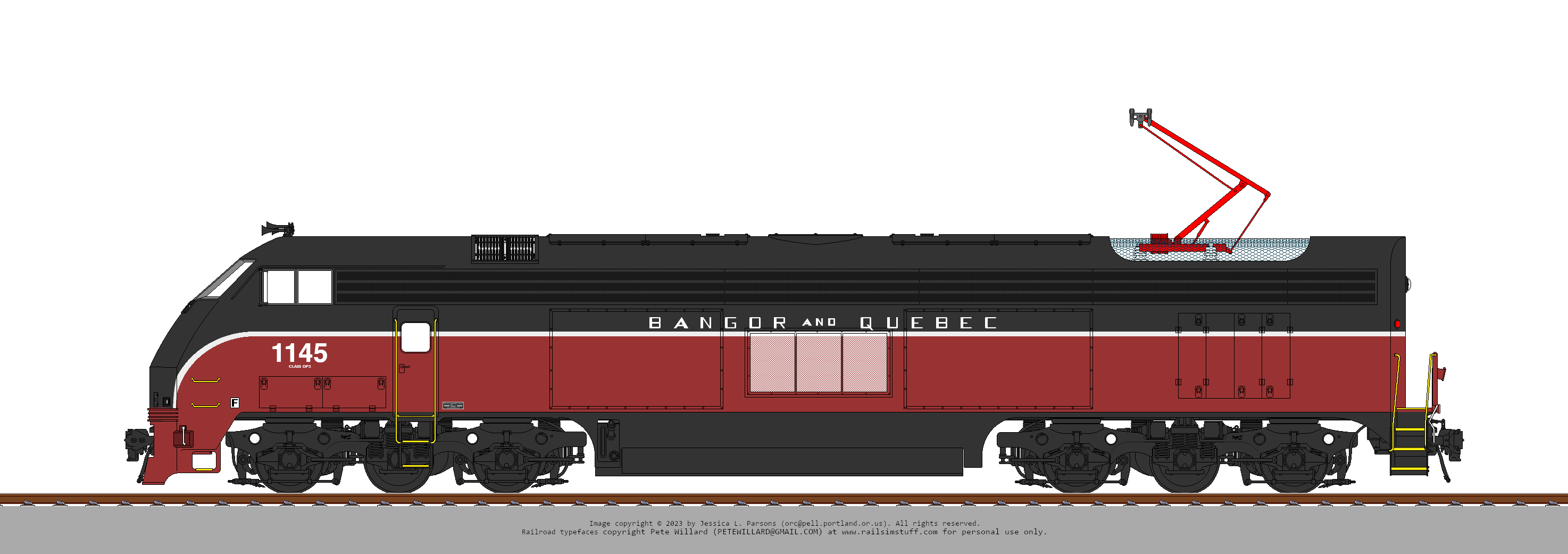
When the D&H started electrifying their mainline west of Binghamton, they followed the lead of the CV and ordered 14 of ILW’s streamlined electro-diesels. ILW had changed the styling of their passenger offering to be a more european shovel-nose design, and the units they delivered to the D&H were of that design despite being purely freight units.
The CV’s DP1s had a pair of Cat 3512s, but ILW switched to using Cummins QSK60s in their place, making the DP2 a 5400HP genset instead of the 4000HP of the DP1. And, unlike the DP1, the DP2s are set up as multi-system (all the AC tensions plus 3kvdc) so they could be operated across the entire Parsons Vale system.
One years after the D&H order, the P&W, which was also in the throes of electrifying their entire system, bought another 4.
(These units eventually found their way to the B&Q, where they are operating on the LT&L/B&Q international line between Montréal and Sydney, NS.)
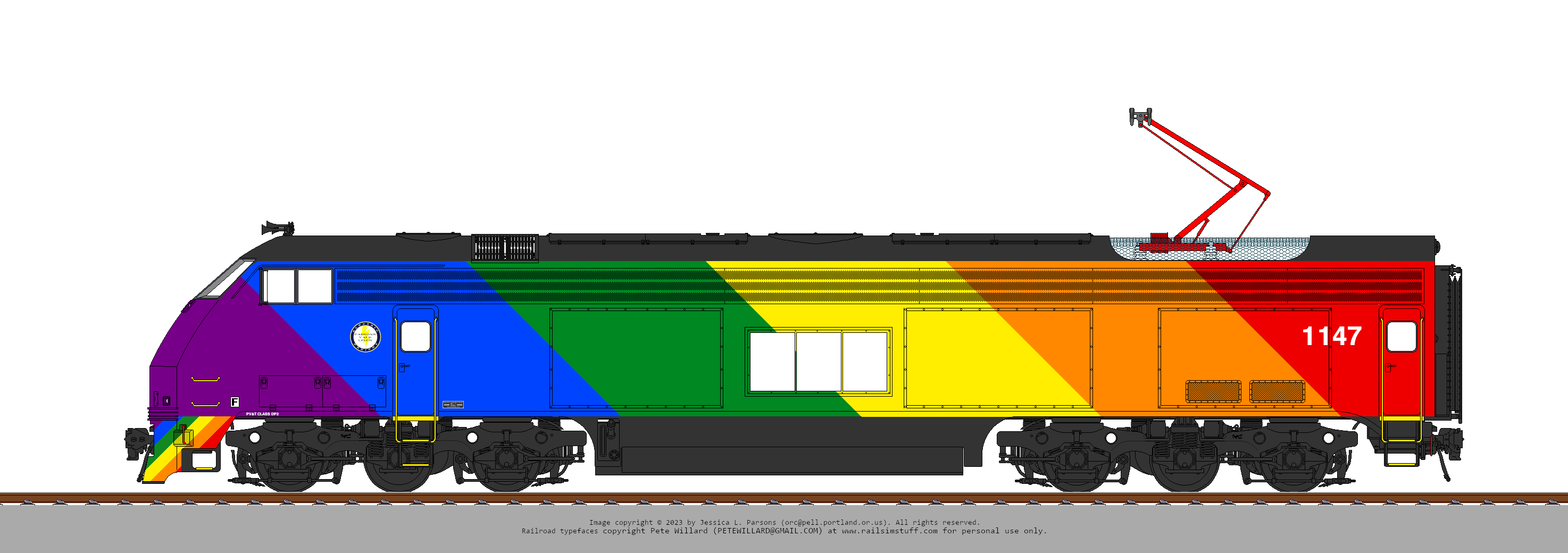
In the late 2010s, TdM engineers looked at the sizes of the QSK78 and thought that if you can fit two QSK60s into an eco-p carbody you should be able to fit a (smaller) QSK78 into the same compartments as the originals. In 2021, one of the original DP2s was taken out of service at a scheduled overhaul to have the new prime movers (and some additional ventilation) installed.
ILW, being very interested in this bit of remanufacturing that came out of the shops across the road, then decided to build 4 prototypes (ILW class eco670/70f; Parsons Vale class DP2b) to test the locomotive market waters.
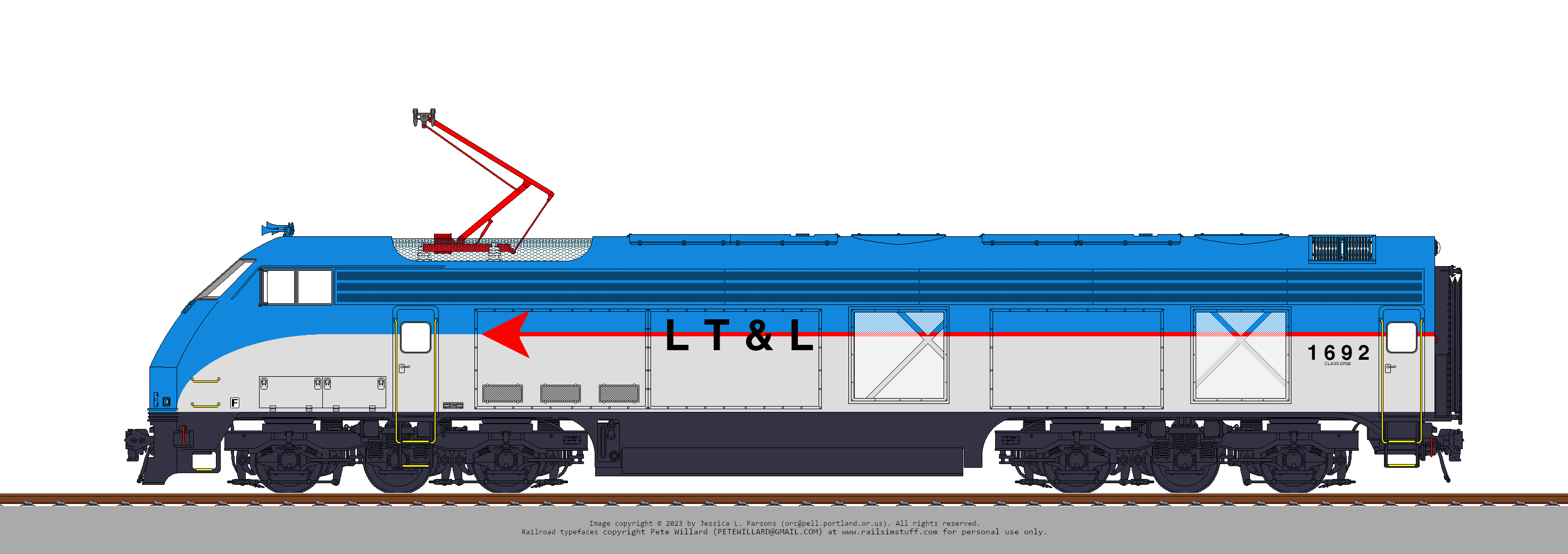
The DP2b’s were redesigned to better cool the slightly hotter prime movers, which involved splitting the radiators and relocating one of the QSK78s to keep the locomotive balanced on its wheels. So what finally came off ILW’s construction floor were engines that if you were looking at them in very dim light and it was smoky you might mistake for a DL1.
The LT&L was happy to have these units doing their testing on LT&L rails, and after they had the bugs worked out and went out as demonstrators (other railroads were interested in the power they could produce, but would only place orders for hood units) purchased the 3 remaining prototypes (one had been wrecked during the demonstration tour.)
These units are either assigned to container freight between St Johns & Chicago or the LT&L/CP power pool between Vancouver and the east.